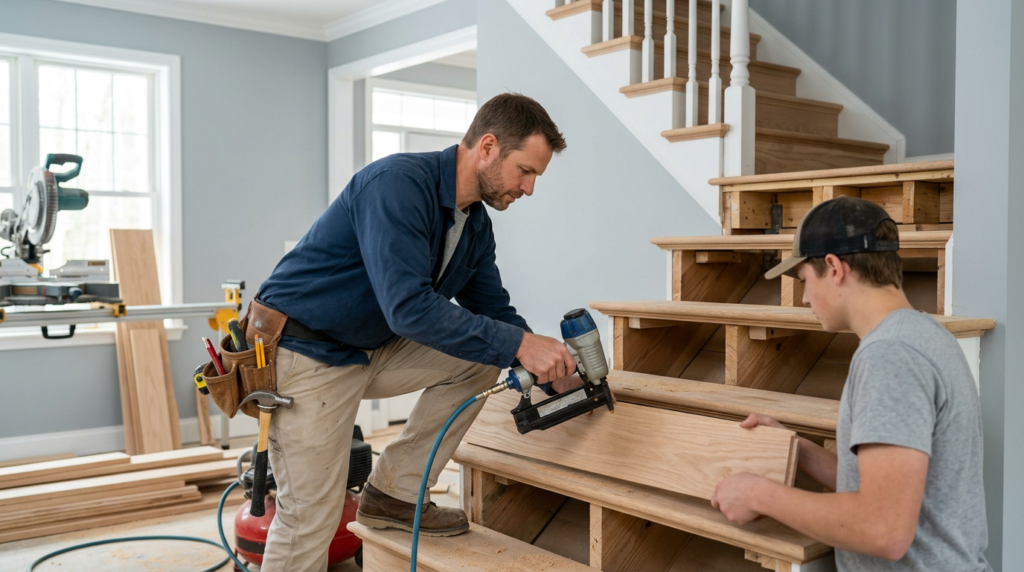
Quick answer: Staircase remodel services typically include tightening or rebuilding loose components, updating treads and risers, replacing or upgrading the rail system, and completing finish work so everything matches. Many scopes also address squeaks, uneven step heights, worn nosings, and basic safety/code checks. Common exclusions are major structural reframing, broad drywall/paint work, and permit/engineering items unless specifically listed in writing.
What’s Usually Included in a Staircase Remodel
Most staircase remodels start with a clear scope: what stays, what gets replaced, and what gets finished to match. If you’re comparing options, staircase remodel services commonly bundle multiple tasks so the stairs look consistent and feel solid underfoot.
Typical inclusions (scannable list): Structural tightening/repairs (as accessible), treads/risers repair or replacement, rail system updates (handrail, balusters, newels), finish work (stain/paint/topcoat), transitions at top and bottom landings (nosings, trim, flooring height changes), safety/code checks (handrail height, guard spacing, secure connections), and site protection/cleanup.
Often excluded unless spelled out: drywall repair and repainting beyond minor touch-ups, major framing changes (like moving the stair opening or rebuilding floors), and permits/engineering (sometimes needed for bigger structural changes or layout alterations). If any of those might apply, ask to see them listed as line items so there are no surprises.
Squeaks, Wobble, and Uneven Steps: What a Remodel Can Address
Cosmetic updates can make stairs look new, but the feel matters just as much. Loose handrails, flexing balusters, shifting newel posts, and “bounce” in the tread are common reasons a remodel expands into reinforcement work.
Squeaks and movement usually come from wood rubbing at joints or fasteners that have loosened over time. Common methods include re-fastening tread-to-stringer connections, adding blocking, using construction adhesive where appropriate, and tightening rail joints. The right fix depends on access from below, the tread type (solid wood vs. plywood/overlay), and the real source of movement (tread, riser, stringer, or railing).
Uneven riser heights can be a trip hazard because your body expects a consistent rhythm. Changes in flooring thickness at the top or bottom landing can also create a “surprise” step. A good scope calls out how those transitions will be handled so the finished staircase feels predictable and safe.
Repair vs Replace: A Quick Decision Guide and Safe Homeowner Checklist
Refinishing is often enough if the treads are structurally sound (no bounce), the nosing edges are intact, and the wear is mostly surface-level scratches, finish failure, or cosmetic staining. This is also a good fit when you like the layout and just want a cleaner, updated look.
Replacement is more likely when tread edges are split or heavily rounded, there’s persistent flexing/bounce, fasteners won’t tighten, risers are cracked through, or the existing material is too thin or patched to finish cleanly. Stringer or deeper structural work is more likely if multiple steps feel loose, the staircase “racks” side to side, or you see gaps opening at the wall/stringer line—especially if the problem repeats after basic tightening.
Simple, safe inspection checklist (no tools required): (1) Hold the handrail and gently shake—note any wobble at newels or brackets. (2) Walk each step and feel for bounce or a change in height. (3) Look for cracks at tread nosings and at riser corners. (4) Check for gaps where treads meet risers or where the stringer meets the wall. (5) Listen for squeaks and note the exact step numbers—patterns help diagnose the source.
How to Prepare and What to Ask Before You Hire
Ask what will be replaced versus re-used, and how the contractor plans to address movement, squeaks, and uneven steps. You’ll also want clarity on finish work: stain matching, paint sheen, the exact finish system (type of topcoat), and how nearby floors and walls will be protected during demolition and finishing.
Confirm how the job will affect daily access. Many staircase projects limit stair use for parts of the day, and finishes can require cure time before heavy traffic. A typical range is a few days to a couple of weeks depending on complexity, drying time, and whether structural corrections are involved.
Get an on-site assessment and a written scope that lists what’s reused vs replaced, the finish system, protection plan, and any timeline constraints for access and cure time.